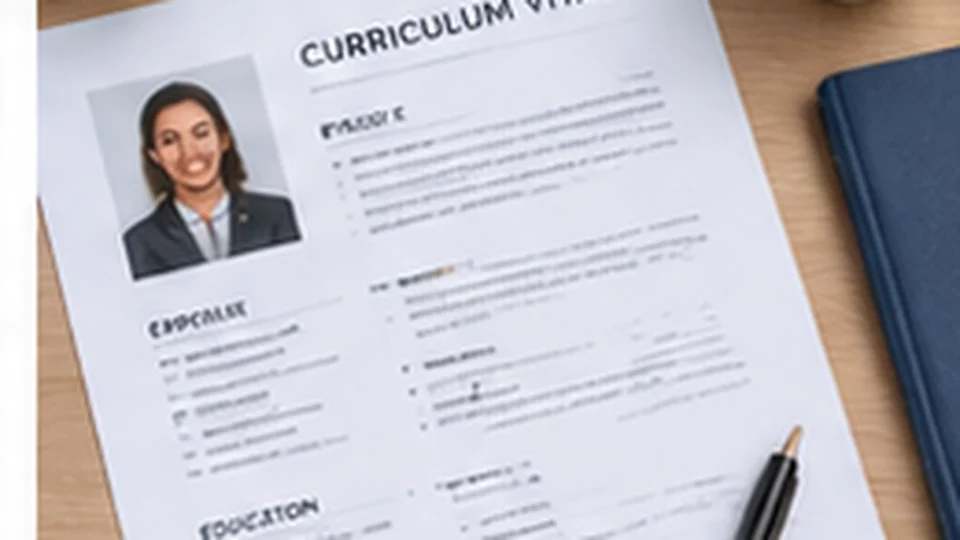
Quick answer: Make the evidence relevant, readable and truthful: standard headings, role-specific language, clear achievements and no keyword stuffing.
If nursing cv international jobs is part of the future you are trying to build, start by turning that ambition into specific decisions: the work you can do, the destination or employer you want, the proof you can show and the next realistic action. Nursing CV for International Jobs: What Recruiters Need to See is built around that journey. It avoids guaranteed-job promises and focuses on preparation you can control.
The reality check before you apply
Before committing time or money, verify the employer, location, role, compensation structure and application path. If information is missing, ask for it. A genuine opportunity should become clearer as you move through the process, not more confusing.
Turn the guide into a 30-minute action plan
Spend ten minutes updating the part of your CV most relevant to this topic, ten minutes collecting proof such as certificates or work examples, and ten minutes identifying three suitable vacancies or practice questions. Small focused sessions usually beat hours of random scrolling.
Write for humans and screening software
A good ATS-friendly CV is not a page full of keywords. Use standard headings, clear dates, readable bullets and the genuine terminology used in your profession. The goal is to make relevant evidence easy for both software and a recruiter to understand.
Turn duties into evidence
Instead of writing “responsible for customer service,” explain the environment and result: handled daily customer enquiries, resolved complaints, updated records or supported a specific volume. You do not need dramatic numbers; you need credible specificity.
Tailor without rewriting everything
Keep a strong master CV. For each role, adjust the headline, summary, skill order and the most relevant bullets. This is faster than starting from scratch and more effective than sending one generic CV everywhere.
Start with the search intent, not the headline
A useful search begins by defining what you actually want: role, location, work arrangement, experience level and the minimum conditions you would accept. Treat nursing cv international jobs as a starting point, then narrow it into a concrete target. This keeps you from wasting time on attractive headlines that do not match your skills or circumstances.
What a strong applicant does differently
Strong applicants do not simply submit more applications. They read the role carefully, identify the evidence the employer is asking for and make that evidence easy to find. That usually means a focused CV, complete answers, sensible examples and documents that support real qualifications rather than vague claims.
Your practical checklist
- Write down the exact role or outcome you are targeting.
- Update the top third of your CV or profile to match that target.
- Collect proof of the skills or credentials you genuinely have.
- Verify the employer, platform or official process independently.
- Save the vacancy, deadline, reference and communication history.
- Prepare two examples that demonstrate relevant judgement or results.
Common mistakes to avoid
- Sending the same generic application to every role.
- Claiming qualifications or experience you cannot verify.
- Ignoring missing or contradictory information because the opportunity sounds exciting.
- Sharing sensitive identity information earlier than necessary.
- Failing to keep copies of important messages, references and receipts.
- Memorizing polished phrases without preparing real evidence or examples.
Questions people also ask
Is nursing cv international jobs realistic for beginners?
It depends on the role. Entry-level opportunities exist, but employers still need evidence of reliability, basic competence and willingness to learn. Build small projects, references or relevant training when formal experience is limited.
How many applications should I send?
Quality matters more than a fixed number. A smaller group of well-matched, complete applications usually teaches you more than sending the same CV to hundreds of unrelated vacancies.
Should I change my CV for every job?
You do not need to rewrite everything. Keep a strong master CV and adjust the headline, summary, skill order and most relevant experience to the vacancy.
How do I know whether an opportunity is legitimate?
Check the employer or platform independently, confirm the role exists, read the full process, avoid pressure tactics and verify sensitive or payment-related requests before acting.
What should I do if I am not getting interviews?
Review whether your target roles match your actual experience, improve the evidence in your CV, check for incomplete applications and practise the screening questions common in that job family.
What to do next
Use this guide to improve one concrete part of your search today. Then browse Travbrew jobs and compare the requirements against your actual experience. If you are building an online writing career, you can also open Travbrew Writing. For more preparation topics, visit the Travbrew Career Guides hub.
Editorial note: Employment, immigration, licensing, medical and government-document requirements can change. Verify time-sensitive rules and official fees with the responsible authority before acting.
Related CV, ATS & Applications guides